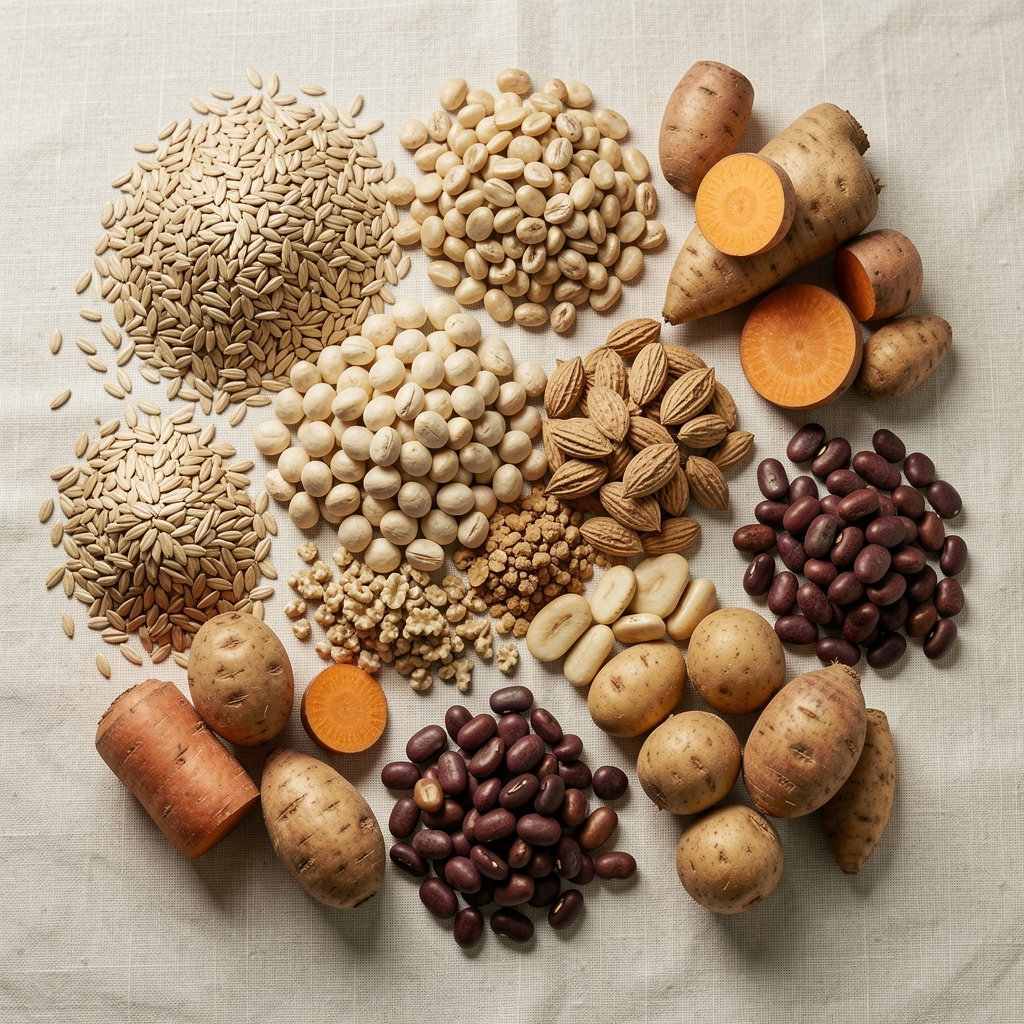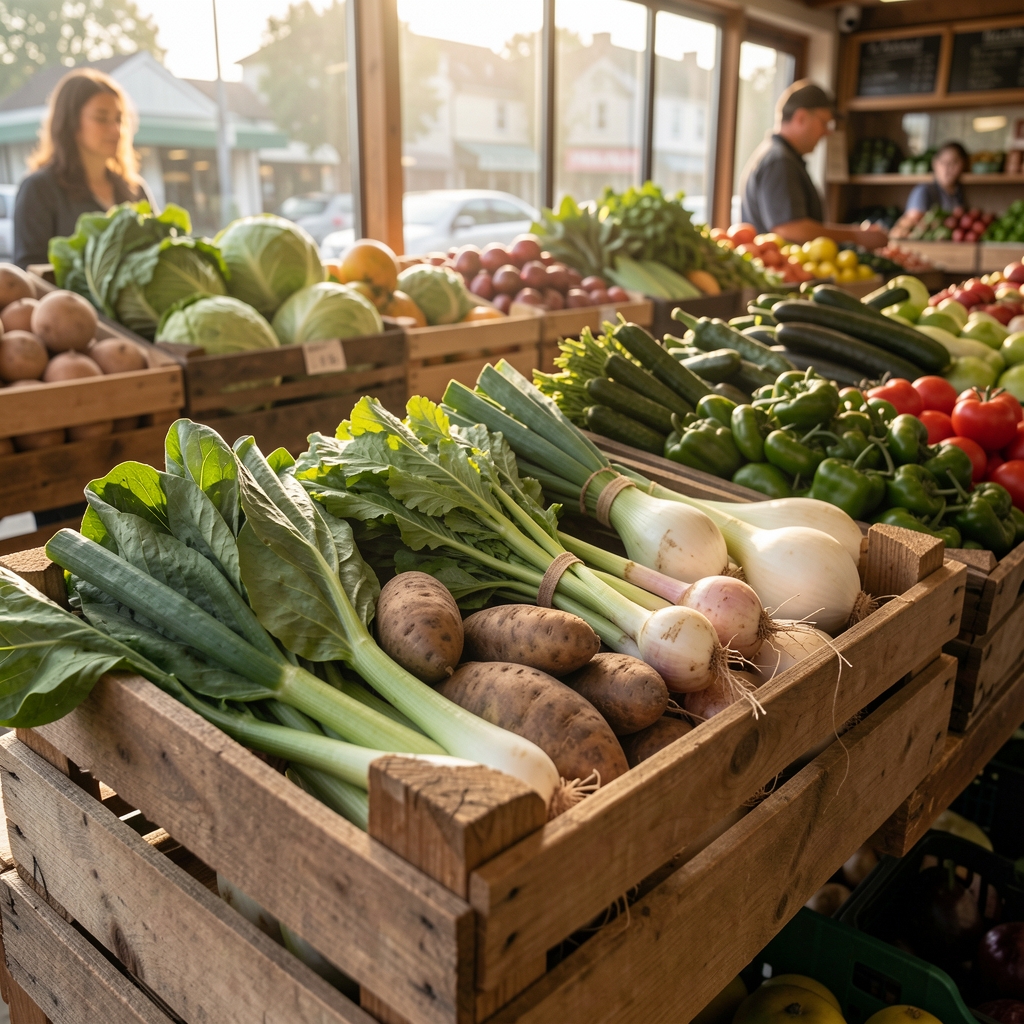
What arrives at the table in January differs markedly from what fills a plate in July. Following seasonal supply shapes not only flavour but nutritional variety across the year — and that variety, sustained over weeks and months, has a quiet but measurable bearing on nutritional balance and how steadily weight settles from one season to the next.
The Seasonal Supply Logic
There is a practical argument for seasonal eating that often goes unstated in the enthusiasm for locally-grown produce: seasonal vegetables and fruits, arriving in quantity at their natural peak, are frequently less expensive, more flavourful, and more nutritionally dense than the same produce grown out of season under artificial conditions or transported over long distances.
For a publication concerned with everyday nutrition and its relationship to weight, the seasonal argument is also a variety argument. A diet that rotates through the seasons naturally consumes a wider range of vegetables and fruits across the year than a diet built around the same reliable selections regardless of what the calendar shows. That variety, in nutritional terms, broadens the range of micronutrients, fibres, and phytocompounds that the diet includes — an outcome that any extended nutritional record tends to support as broadly positive for weight awareness and sustained energy.
January to March: Root and Brassica Season
The first quarter of the year in England offers a vegetable landscape that is easy to dismiss as austere. Parsnips, celeriac, swede, leeks, kale, Brussels sprouts, purple sprouting broccoli arriving towards March — these are not glamorous ingredients in the contemporary food imagination. They are, however, nutritionally substantial and, when cooked from scratch, enormously versatile.
A field note from January of this year: a pot of leek and celeriac soup prepared on Sunday afternoon provided portions across three lunches. The meal required approximately thirty minutes of preparation, contained no processed ingredients, and — critically for portion awareness — produced a sense of fullness that lighter lunch options had not. The celeriac alone contributes dietary fibre, vitamin K, and phosphorus at concentrations that winter eating tends to make available cheaply and in abundance.
Purple sprouting broccoli, arriving from February in English growing conditions, marks the first shift of the year towards lighter produce. It is, by most nutritional accounts, among the more micronutrient-dense vegetables available — a fact worth knowing for a period when many people feel their diet has become repetitive and somewhat heavy.

April to June: The Spring Shift
Spring introduces asparagus, broad beans, peas, spinach, watercress, and — by late May — the first courgettes and new potatoes of the season. The shift from the dense, starchy quality of winter produce to the lighter, higher-water-content nature of spring vegetables is noticeable in the texture of meals and, over a few weeks, in how one’s appetite responds to them.
Higher-water-content vegetables contribute to hydration and — because they tend to occupy more volume on the plate for fewer calories — support portion awareness with less conscious effort. A plate heavy with spring spinach or broad beans fills the eye and the stomach differently than the same calorific plate of winter root vegetables. Neither is superior; they are suited to different seasons and different biological needs.
Asparagus, though its English season is famously brief (roughly six to eight weeks), offers a useful illustration of seasonal intensity: during its window, it is inexpensive, abundant, and remarkably good in its simplest form — steamed, with olive oil and sea salt. Outside that window, it is expensive, imported, and noticeably less flavourful. The nutritional content is similar in both cases, but the practical argument for eating it in season rather than out of it is considerable.
“The seasonal plate, kept over a year, records a kind of involuntary dietary variety — a broadening of the nutritional range that a fixed shopping list cannot replicate.”
July to September: Summer Abundance and Weight Rhythm
The summer months — with tomatoes, cucumbers, courgettes, peppers, green beans, sweetcorn, and the full range of soft fruits — represent the period of greatest vegetable and fruit variety in the English year. It is also, for many people, the period of most disrupted routine: holidays, social eating, longer days, altered sleep patterns, and different activity levels.
This combination of greater variety and disrupted routine produces an interesting nutritional tension. The raw materials for highly nutritious eating are more abundant and affordable than at any other point in the year. Yet the conditions that support regular home cooking — routine, consistent mealtimes, weekday predictability — are often at their weakest.
The field notes from last summer suggest that the households that maintained the most consistent nutritional balance during August were those that had built simple, low-effort seasonal preparations into their routines: a pot of ratatouille made once or twice a week, a supply of washed salad greens kept in the refrigerator, fruit available on the counter rather than stored away. The barrier to eating well in summer is rarely the availability of good produce. It is, more often, the reduction in the cooking habits that turn that produce into meals.
October to December: Transitional Eating and the Autumn Pattern
Autumn brings the squash family, mushrooms, fennel, cavolo nero, and the full range of orchard fruits — apples, pears, quince — alongside the return of root vegetables as the season deepens into November. It is nutritionally a rich period, though one that tends to coincide with a return to routine after summer and a gradual shift towards heavier, warmer meals.
The weight observations from autumn are among the more consistent in the year’s record. The season’s produce naturally supports the kind of warm, filling, fibre-dense cooking that the shortening days tend to call for. Butternut squash, lentils, mushrooms, and kale make a convincing case for autumn as one of the more nutritionally satisfying seasons — not despite the loss of summer’s lightness, but because the season’s ingredients respond well to the slow, attentive cooking that the cooler months make appealing.
The full-year record, when read as a continuous document, shows a diet that has been nutritionally varied, broadly plant-centred, and seasonally inflected in its composition. It also shows something harder to quantify: a relationship with food that has been more attentive and more interesting for the discipline of following what the season offers rather than constructing each week’s shopping from a fixed list of familiar items.
Seasonal Variety as a Nutritional Principle
- Winter roots and brassicas provide fibre, vitamin K, and sustained satiety through the cold months.
- Spring produce, with higher water content, supports lighter eating patterns as activity typically increases.
- Summer abundance offers peak nutritional density in fruits and vegetables but demands more active meal preparation.
- Autumn’s squash, legumes and mushrooms support warming, fibre-rich cooking as routines resume.
- Following seasonal supply produces involuntary dietary variety — a broader micronutrient range than a fixed shopping list can achieve.
- The practice of noting seasonal changes in the weekly food record shows patterns that no single-week snapshot can reveal.
Articles published on Marelova Field Notes are editorial in nature and reflect the writers’ observations on everyday nutrition practices and weight awareness. The content is not intended as professional advice, nor as guidance for the management of any specific condition. Readers with specific concerns about their daily routines are encouraged to speak with a qualified wellness professional.